Why You Should Always Hire a Licensed Professional Electrician in Denver
If you need to hire a professional electrician in Denver, licensing should be one of the first things you check. Electrical work can affect fire safety, shock protection, appliance performance, and the condition of your home long after the job is finished. That makes the question of why hire an electrician more practical than it may sound. The person doing the work needs to understand the system, identify hidden problems, and complete the job to the standards that apply to your property.
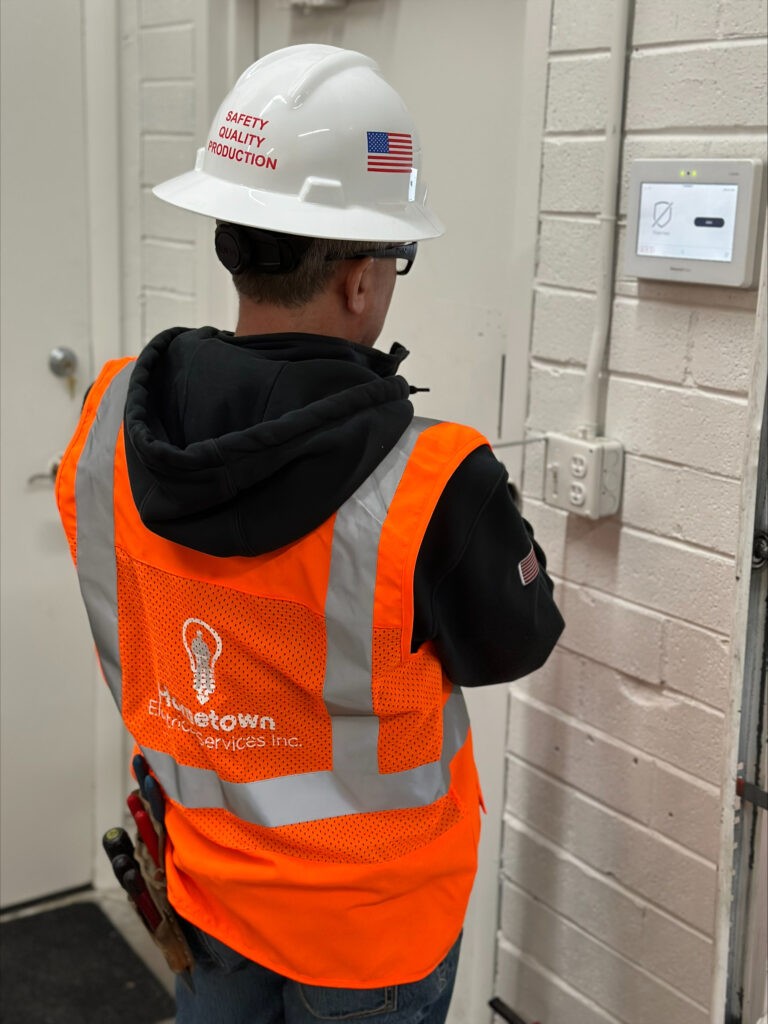
Hometown Electrical Services provides residential electrical
services
throughout the Denver metro area. The company is licensed and insured and has more than 30 years of experience. This article explains what a
licensed electrician brings to the job, the risks of DIY electrical work, when homeowner work may be appropriate, and what to check before
you hire someone.
Hometown Electrical Services Credentials
Licensed and insured Denver electrical contractor | BBB Accredited Business | Home Depot Authorized Service Provider | 30+ years serving the Denver metro | Call 303-335-7799
What a Licensed Electrician Can Do That a DIY Job Cannot
A loose outlet or a breaker that keeps tripping may look like a simple repair. The visible symptom, however, does not always show where the problem starts. A professional electrician can test the circuit, check connections, assess the panel, and determine whether the fault is limited to one device or part of a wider electrical issue.
Proper test equipment can reveal problems that are not visible from the outside. An electrician may find overheated connections, damaged insulation, overloaded circuits, undersized wiring, or a breaker that is no longer operating as intended.
Permits and inspections are another part of the job. Electrical work that requires a permit has to be completed and documented correctly so it can pass the applicable inspection. A professional electrician can determine which permits apply, complete the work to the required standard, and coordinate inspections when they are part of the project.
This is one of the clearest answers to why hire an electrician: you are paying for diagnosis, safe execution, code knowledge, and accountability, not simply for someone to replace a part.
The Real Risks of DIY Electrical Work in Denver
The risks of DIY electrical work start with personal safety. Electrical shock can cause serious injury, and faults created during a repair may remain hidden until the circuit is put under load. A loose connection, damaged conductor, or incorrectly sized component can also create heat inside a wall or electrical box without giving the homeowner an immediate warning.
There is a property risk as well. A repair that seems to work today can fail later if the connection was not secure or the installed device was not suitable for the circuit. Arc faults and overheating can develop where they are difficult to see, which is one reason electrical work should not be judged only by whether the light or outlet turns on afterward.
Permit and inspection requirements add another concern. Depending on the work, Denver homeowners may need a permit and inspection. Owner-occupiers can qualify to perform permitted work themselves in some circumstances, but city requirements still apply. Work completed outside those requirements can create problems when a home is inspected, remodeled, or sold.
Insurance deserves the same careful approach. Coverage depends on the policy and the circumstances of a loss, so homeowners should not assume that every repair will be treated the same way. If electrical work is unpermitted, unsafe, or completed by someone who was not properly qualified, it can complicate questions about responsibility and coverage after damage occurs.
For homeowners comparing DIY vs. licensed electrician Denver options, the savings on labor should be weighed against the consequences of a mistake that remains hidden behind a wall or inside a panel.
Why Professional Denver Electrical Services Are Essential for Home Safety
Good home electrical safety in Denver starts with knowing what the system is doing, not waiting for a complete failure. Breakers that trip repeatedly, outlets that feel warm, lights that dim when appliances start, buzzing switches, burning odors, or unexplained power loss can all point to a problem that needs more than a quick reset.
Professional Denver electrical services are useful because an electrician can look beyond the immediate symptom. A tripping breaker may be responding to an overloaded circuit, a damaged appliance, a ground fault, a loose connection, or another condition. Replacing the breaker without finding the cause can leave the original problem in place.
Older homes deserve particular attention because electrical systems are often changed over decades. New appliances, remodeled kitchens, finished basements, home offices, and EV charging can increase demand. Wiring and panels that suited an earlier version of the home may need to be assessed before more load is added.
GFCI and AFCI protection, grounding, smoke alarms, and properly functioning breakers each address different hazards. Homeowners can review Hometown Electrical Services’ Denver smoke alarm guide for practical information on maintaining one important part of the home’s safety system.
A professional inspection can also help separate urgent repairs from improvements that can be planned. That gives homeowners a clearer picture of what needs attention now and what can be scheduled later.
DIY vs. Hiring a Licensed Electrician in Denver: When Each Makes Sense
The line between a reasonable homeowner task and electrical work that needs professional help depends on the project, the property, and local requirements. Resetting a tripped GFCI, changing a light bulb, or checking whether a plug-in appliance is causing a breaker to trip are very different from opening a panel, adding a circuit, or installing new wiring.
Denver has an owner-occupier permit process for qualifying homeowners, and electrical work under that process is subject to city requirements. Permission to perform the work does not remove the need to understand electrical hazards, code requirements, testing, and inspection.
Projects involving a service panel, new circuits, service upgrades, substantial new wiring, subpanels, EV charging equipment, or generator connections are good examples of when to call an electrician. These projects affect capacity, overcurrent protection, grounding, conductor sizing, or other parts of the system where an error can have consequences well beyond the device being installed.
Like-for-like device replacement may appear simpler, but even that can uncover older wiring, heat damage, loose conductors, missing grounding, or an incorrectly wired box. Stop if you find something you do not recognize, see damaged insulation, smell burning, or cannot confirm that the circuit is safely de-energized.
Anyone researching DIY electrical work Colorado rules should also remember that local permit requirements matter. A rule that applies in one Colorado jurisdiction may not apply in exactly the same way in Denver. Check the current city requirements before starting work.
If you are unsure whether your project needs professional electrical work, call Hometown Electrical Services at 303-335-7799 or contact the team for an assessment. Getting the scope checked before work starts is much easier than correcting a problem after walls are closed or a project fails inspection.
How Licensing and Insurance Protect You as a Denver Homeowner
Hiring a licensed and insured electrician in Denver gives you a way to check who is responsible for the work before the project begins. Licensing shows that the contractor or electrician is operating within the state and local requirements that apply to the work. Homeowners can verify professional licensing through Colorado’s Division of Professions and Occupations.
Insurance addresses a different type of risk. A legitimate electrical contractor should be able to provide current proof of the coverage appropriate to its work. Homeowners should ask for that documentation rather than relying on a verbal statement or a logo on a truck.
Before work begins, ask who will pull any required permit, who will perform the electrical work, whether an inspection is expected, and what documentation you will receive when the job is complete. Those questions are useful whether the project is a small repair or a larger service upgrade.
Price still matters, but compare the scope rather than the total alone. One contractor may include permits, testing, cleanup, and inspection coordination, while another quote leaves some of those items out.
A licensed electrician should also explain the recommended repair in plain language, including what was found and whether the issue affects one circuit or a larger part of the electrical system.
When to Call an Electrician Instead of Troubleshooting It Yourself
Some electrical problems should move straight to a professional assessment. Call an electrician when you smell burning near an outlet or panel, hear crackling or buzzing from electrical components, see scorch marks, experience repeated breaker trips, find an outlet or switch that is unusually hot, or lose power without an obvious cause.
You should also call before projects that add meaningful electrical load. EV chargers, hot tubs, electric ranges, HVAC equipment, workshops, additions, and major kitchen remodels can require new circuits or more available capacity. An electrician can check the existing service and panel before new equipment is connected.
Repeated symptoms deserve attention even when the system seems to return to normal. A breaker that resets successfully has done its job, but frequent trips mean the circuit needs to be assessed. The same applies to lights that repeatedly flicker or dim when equipment starts.
Emergency conditions are different. If there is active smoke, fire, or significant sparking, move to a safe location and call emergency services. For urgent electrical problems that do not involve an active fire, call Hometown Electrical Services at 303-335-7799 to schedule service.
FAQs — Hiring a Professional Electrician in Denver
Homeowners often have questions about licensing, permits, DIY work, and how to choose the right person for a repair. These answers cover the practical issues to check before electrical work starts.
Ready to Hire a Licensed Professional Electrician in Denver?
Electrical work can look simple from the outside, but a safe repair depends on what is happening throughout the circuit and how the work fits into the rest of the home’s electrical system. Hiring a qualified professional gives you proper diagnosis, code-aware work, and a clear point of responsibility if the project requires permits or inspection.
Hometown Electrical Services has served the Denver metro area for more than 30 years and provides licensed, insured residential electrical services, including repairs, troubleshooting, and upgrades. Call 303-335-7799 or contact Hometown Electrical Services to request an estimate.
When you need to hire a licensed electrician in Denver, choose someone who can explain the problem, document the work, and complete the job with safety at the center of the decision.